
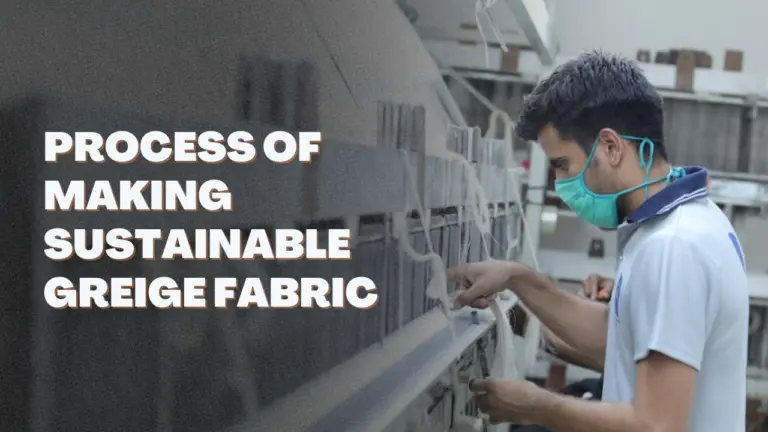
Process of Making Sustainable Greige Fabric
The global textile industry relies heavily on unfinished raw materials to create the diverse range of garments and industrial fabrics we see today. Before any fabric can be dyed, printed, or treated for water resistance, it exists in its most natural state: greige fabric.
At Radhey Krishna Cotweaving, we are a leading manufacturer of sustainable greige fabric. We export high-quality, GOTS and Global Recycled Standard certified greige materials to clothing manufacturers and textile converters across the world. Understanding how this foundational fabric is made is critical for brands looking to build a sustainable, transparent supply chain from the ground up.
In this guide, we will explore exactly what greige fabric is, the materials used to weave it, and the step-by-step manufacturing process required to produce it sustainably.
What is Greige Fabric?
Greige fabric (pronounced “gray”) is an unfinished woven or knitted textile that has not yet been bleached, dyed, or chemically treated. It represents the raw, natural state of fabric immediately after it leaves the weaving loom, retaining the natural off-white or beige color of its source fibers.
Despite its pronunciation, greige fabric is not actually gray in color. It is simply a “loom-state” material waiting for its final finishing processes. Because it has not been chemically treated or washed, it retains natural impurities like seed husks (in cotton) and has not yet undergone shrinkage.
Where Does Greige Fabric Come From?
Greige fabric typically comes from weaving raw natural fibers like cotton and silk, or synthetic fibers like polyester and nylon, on industrial looms. Because greige simply refers to the unfinished state of the textile, it can be manufactured in a wide variety of weave structures.
The type of yarn and weaving pattern dictates the fabric’s ultimate use. Some of the most common types of greige fabric include:
- Poplin Greige: A plain weave fabric made from cotton or silk. It is highly valued for its rigid durability and smooth surface, making it ideal for uniforms, casual apparel, and display banners.
- Silk Greige: Made from raw silk fibers, this fabric is known for its natural elasticity and smooth finish. It is exceptionally lightweight and used to create premium bed sheets, nightgowns, and ties.
- Twill Greige: Distinguished by its diagonal ribs, twill greige is usually woven from heavy cotton. It is heavier, wrinkle-resistant, and highly adaptable, serving as the raw base for gabardine coats and denim.
- Drill Greige: Often referred to as raw khaki texture, drill greige is a heavy, durable twill weave designed for maximum rigidity. It is the foundation for rugged workwear and safari suits.
What Are the Uses of Greige Fabric?
Greige fabric is used as the raw foundational material for almost all finished textiles, including apparel, upholstery, home furnishings, and industrial products. Textile converters purchase greige fabric in bulk to bleach, dye, print, and treat it according to specific consumer demands.
One of the most vital characteristics of greige fabric is that it is unwashed. This means it will typically shrink by about 10% to 15% during the dyeing and finishing process. This post-wash shrinkage actually pulls the woven yarns closer together, resulting in a tighter, stronger, and more flexible finished product.
How Is Sustainable Greige Fabric Made?
Sustainable greige fabric is made through a meticulous three-step process: spinning raw organic or recycled fibers into yarn, preparing the warp threads on a sizing machine, and finally weaving the warp and weft yarns together on high-speed air-jet looms.
Producing this fabric sustainably requires minimizing water usage, capturing dust, and utilizing eco-friendly sizing agents.
Step 1: Spinning the Yarn
Before weaving can begin, raw fiber must be spun into yarn. The raw organic cotton or recycled polyester is cleaned to remove foreign objects like twigs and seeds. The cleaned fiber is carded into a thick rope called a sliver, which is then drawn and spun into tight, continuous yarn using ring spinning or open-end spinning machinery.
Step 2: Warp Preparation (Sizing)
The spun yarn must be prepared for the immense physical stress of the weaving loom. The warp (vertical) threads are arranged on a warping machine and passed through an eco-friendly sizing solution. This starchy coating strengthens the yarn, preventing abrasions and breakages during the high-speed weaving process.
Step 3: Weaving on the Loom
The final step involves interlacing the prepared warp yarns with the horizontal weft yarns. Modern manufacturers use advanced air-jet looms that utilize high-pressure air to shoot the weft yarn across the warp threads at incredible speeds, producing tight, uniform greige fabric ready for export.
Greige Fabric vs. Finished Fabric
Understanding the difference between the raw loom-state and the final product is crucial for textile sourcing:
| Feature | Greige Fabric | Finished Fabric |
|---|---|---|
| State | Raw, loom-state (unfinished) | Bleached, dyed, or printed |
| Color | Natural off-white, beige, or raw synthetic | Any custom color or pattern |
| Texture | Stiff (contains sizing starch and impurities) | Soft, washed, and chemically softened |
| Shrinkage | Unshrunk (Will shrink 10-15% when washed) | Pre-shrunk and dimensionally stable |
| Primary Buyer | Textile Converters and Dye Houses | Retailers and Garment Manufacturers |
Whether you need a heavy cotton canvas fabric for industrial use or a soft organic cotton fabric for apparel, it all begins as sustainable greige.
Frequently Asked Questions About Greige Fabric
What exactly is greige fabric?
Greige fabric is raw, unfinished woven or knitted textile that has not been bleached, dyed, or treated with any chemical finishes. It is the natural “loom-state” material that serves as the blank canvas for all finished fabrics.
Is greige a color or a fabric?
In the textile industry, “greige” refers to the unfinished state of the fabric, not its color. While the word sounds like “gray,” raw greige cotton is actually a natural off-white or beige color containing natural seed impurities.
Why do textile companies buy greige fabric?
Textile converters and fashion brands buy greige fabric in bulk because it is highly cost-effective and acts as a blank slate. Purchasing raw greige allows them to dye, print, and finish the fabric precisely to their custom seasonal requirements.
Does greige fabric shrink?
Yes, greige fabric is entirely unwashed and has not been pre-shrunk. When it undergoes its first wet finishing process (like bleaching or dyeing), it will typically shrink by 10% to 15%, causing the weave to become tighter and stronger.