
 ®
Recycled From Waste.
Engineered For Scale.
100% Recyclable Again.
ReWeav® transforms verified pre-consumer garment cutting waste and post-consumer PET bottles into premium sustainable fabrics. Engineered with minimal water consumption, zero added dyes, and a near-zero wastage policy at our 100% solar and wind powered weaving mill in Rajasthan, India.
Select Circular Feedstock
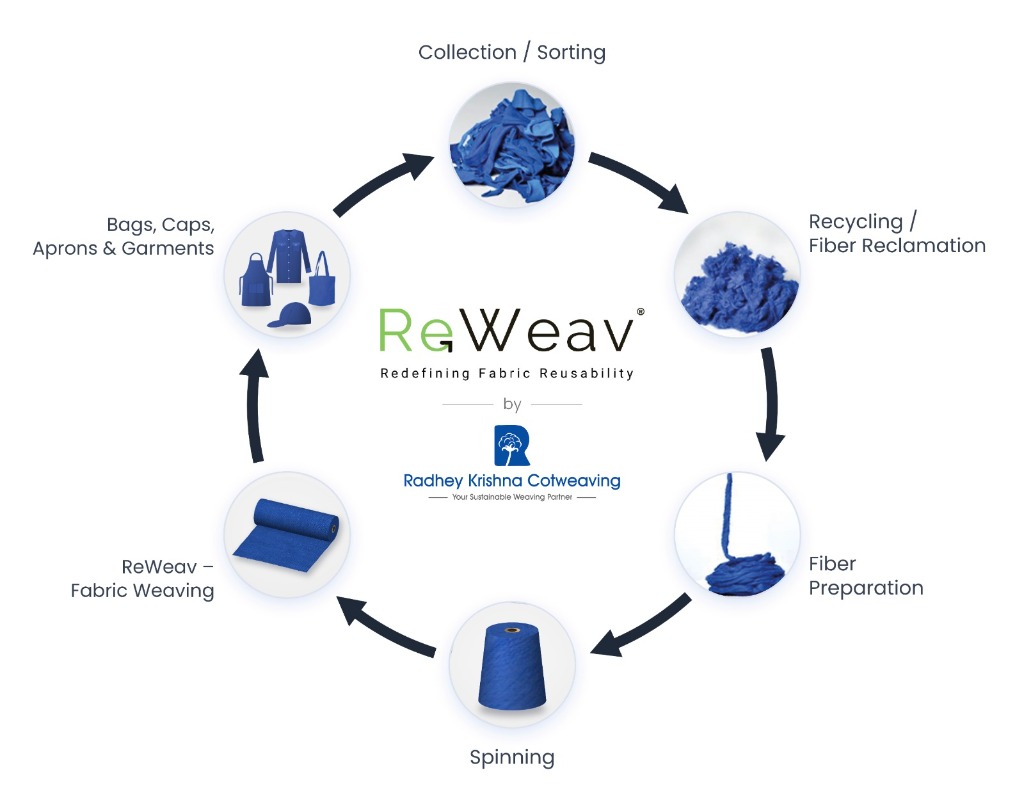
Garment Cutting Waste → Mechanical Yarn → ReWeav® Fabric
100% pre-dyed garment offcuts collected from export houses, mechanically shredded without water or chemicals, and re-spun into certified circular cotton yarn.
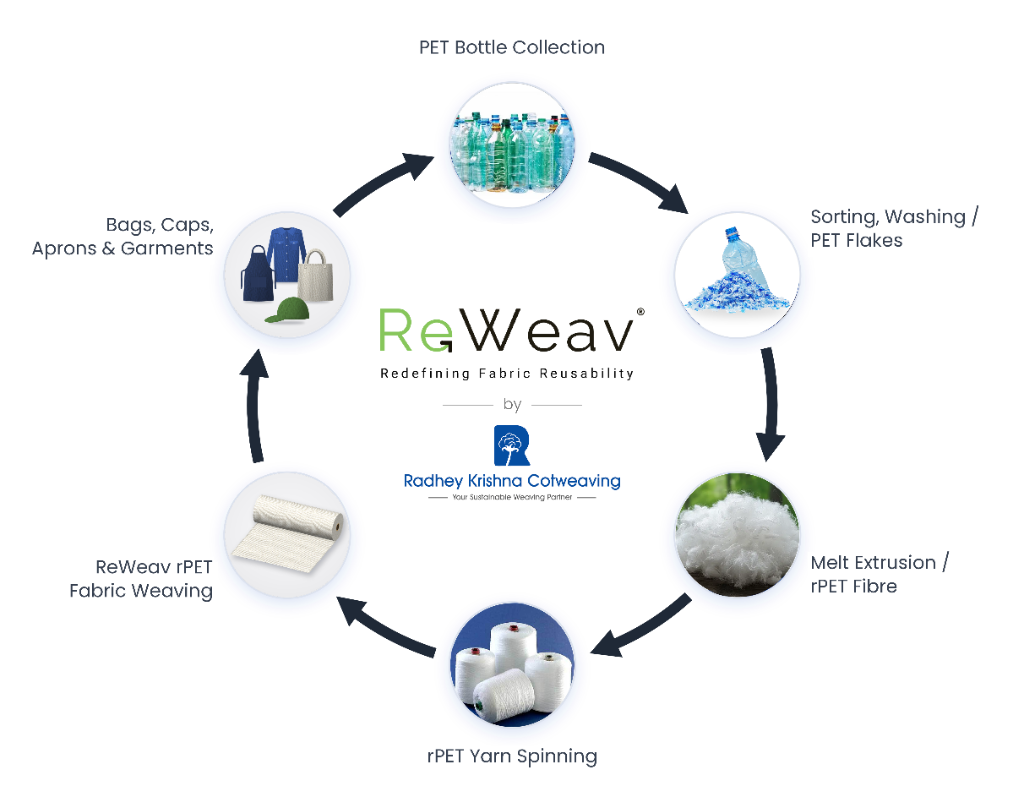
Discarded PET Bottles → Extruded rPET Fibre → ReWeav® Fabric
Post-consumer plastic bottles collected, cleaned, shredded into flakes, and melt-extruded into high-tenacity polyester fibers for heavy-duty canvas, twill, and drill.
What If Waste Could Become The Raw Material For The Next Product?
Closing the loop on textile and plastic waste with zero chemicals, zero dyeing water, and full supply-chain transparency.
What if Waste Could Become The Raw Material For The Next Product?
We make ReWeav® fabrics from verified pre-consumer dyed garment cutting waste and post-consumer recycled PET, converted into pre-dyed, mechanically recycled yarns.
Because the colour comes from the waste stream itself, the fabric requires zero dyeing water, toxic chemicals, or synthetic dyes. The result is a mechanically recycled fabric that is itself recyclable, delivering true textile-to-textile circularity.
The entire chain is independently traceable through a GRS Transaction Certificate or Aware™ digital verification, standing out as one of the most eco-friendly choices for reusable fabric. Sustainability at its core.
1 kg of ReWeav® recycled cotton fibre saves up to
drinking water
watching TV
A4 paper
Recycled Material to Sustainable Fabric
The Recycled Cotton Journey
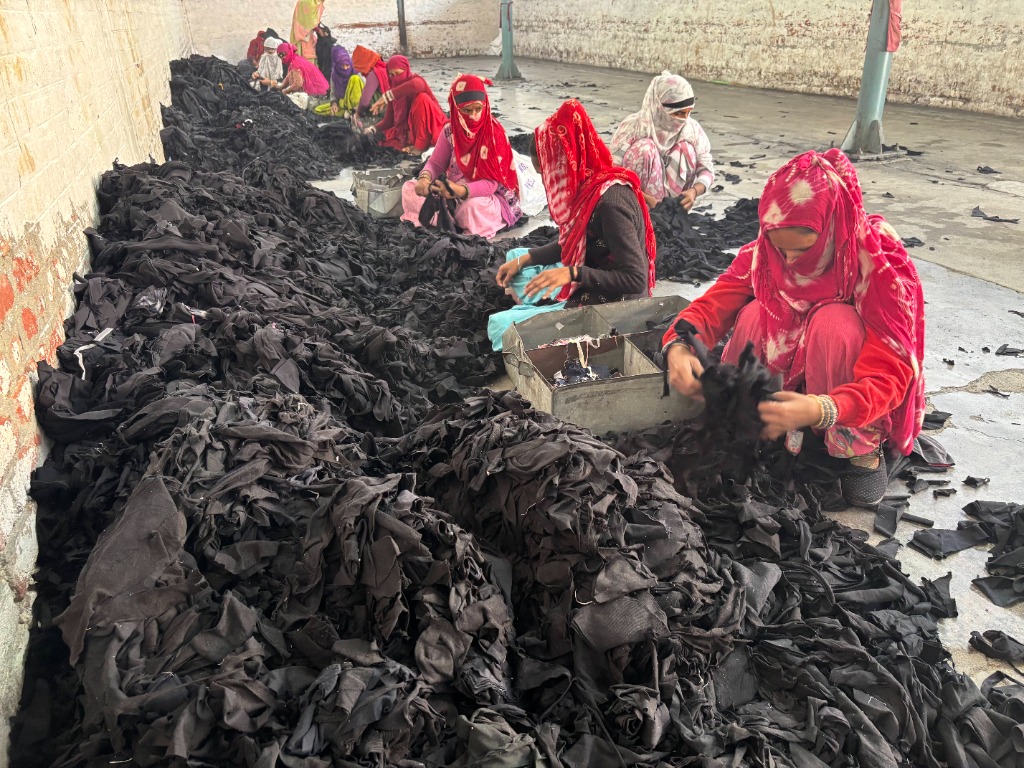
Old garments & textile waste are collected and sorted by fibre type and colour.
Fabrics are mechanically shredded into raw cotton fibres — dry mechanical processing without chemicals or dye baths.
Recovered fibres are re-spun into new yarn then woven into fresh fabric on looms.
Final fabric is finished, quality-checked, and certified — ready as sustainable ReWeav fabric.
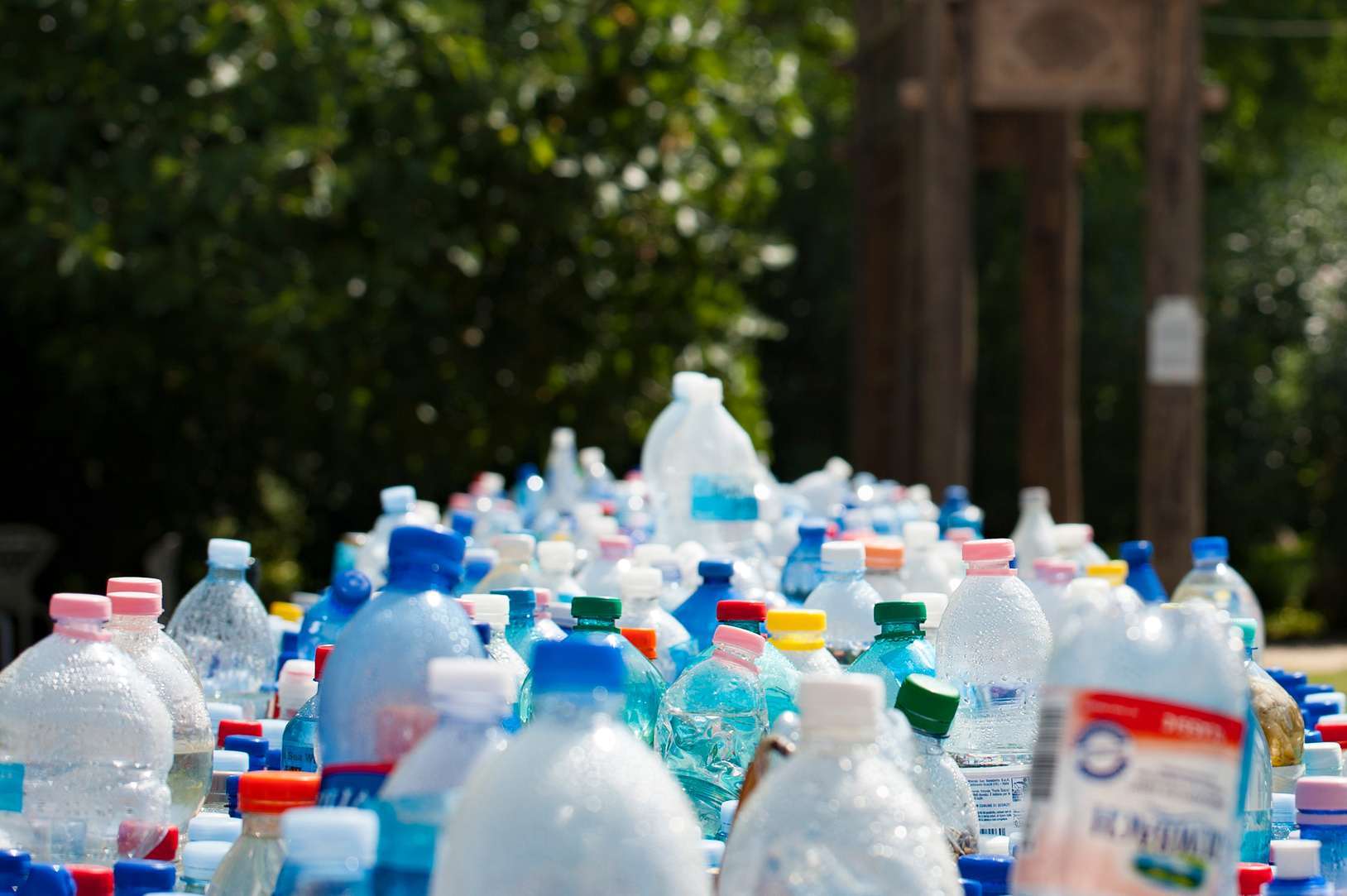
The rPET Fabric Journey
Post-consumer PET plastic bottles are collected, washed, and sorted by color.
Sorted bottles are shredded into flakes, melted, and extruded into fine polyester fibers.
The recycled polyester fibers are spun into high-quality, durable yarn.
The yarn is woven into sustainable, high-performance fabrics ready for production.
From basic to limitless possibilities
Duffel bags, tote bags, pouches and aprons — all made from ReWeav® canvas.

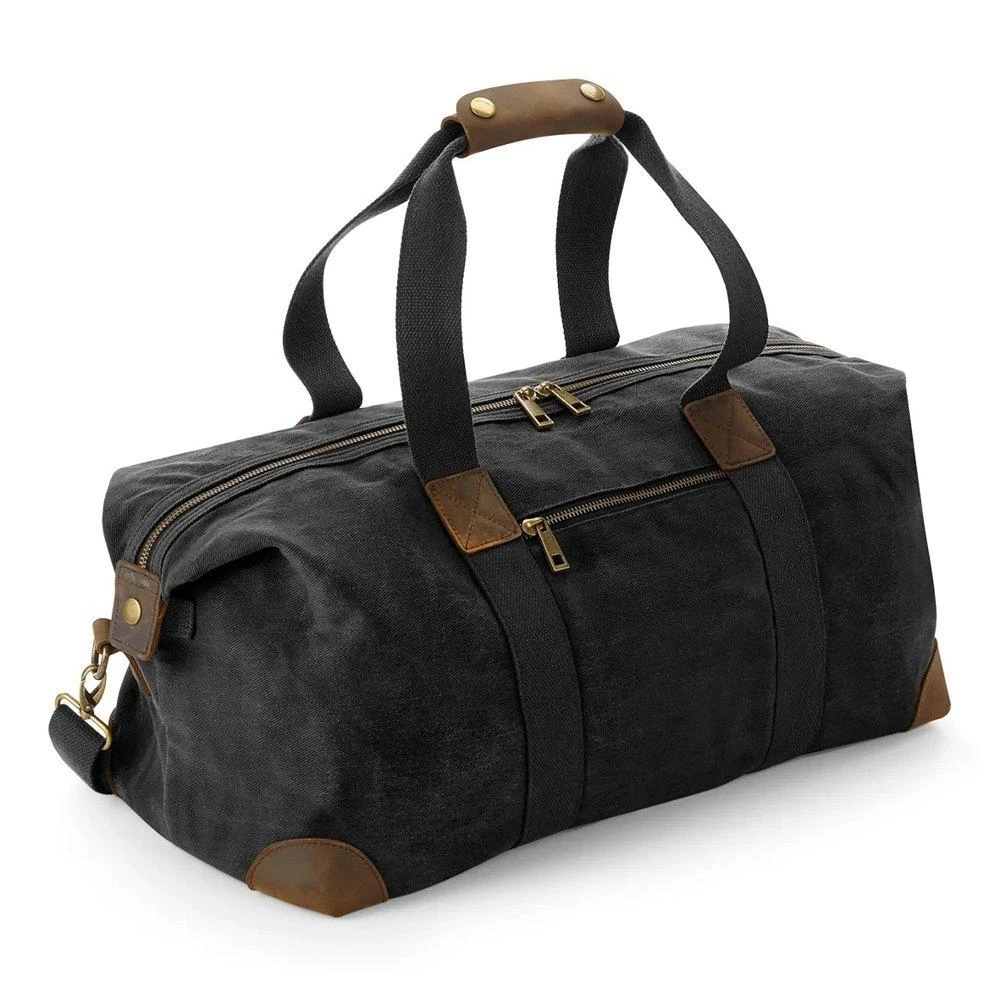
Duffel Bags
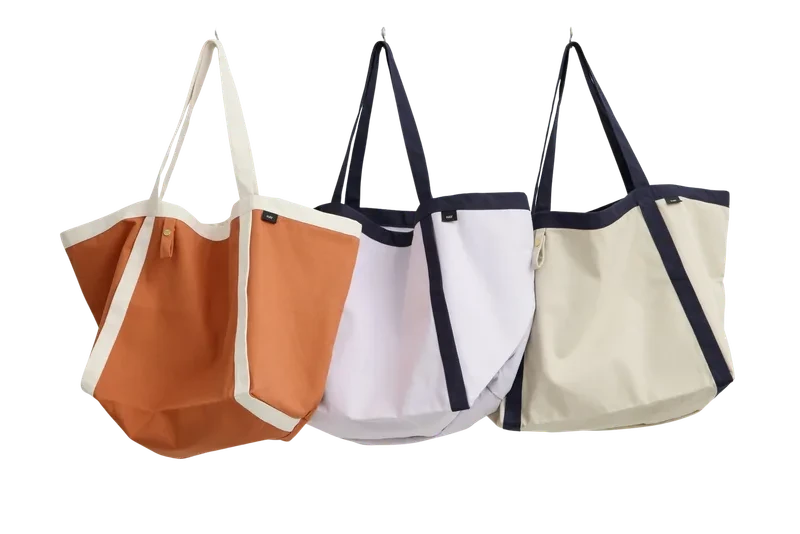
Tote Bags
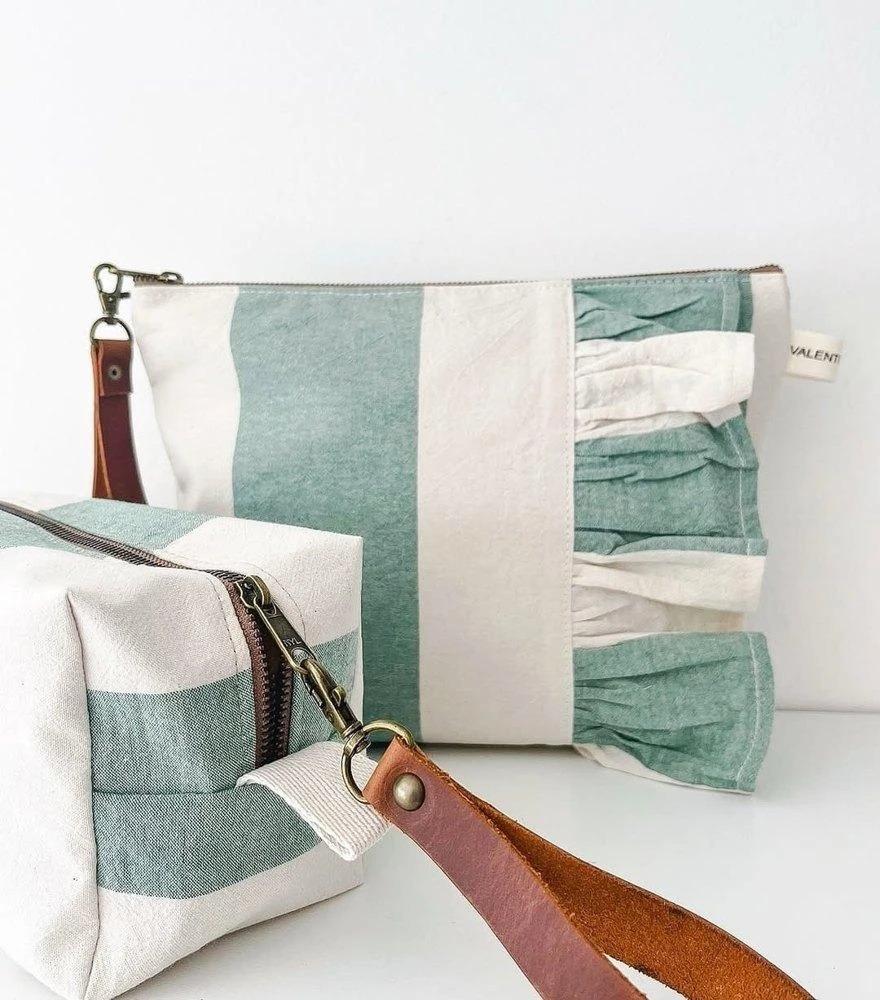
Pouches
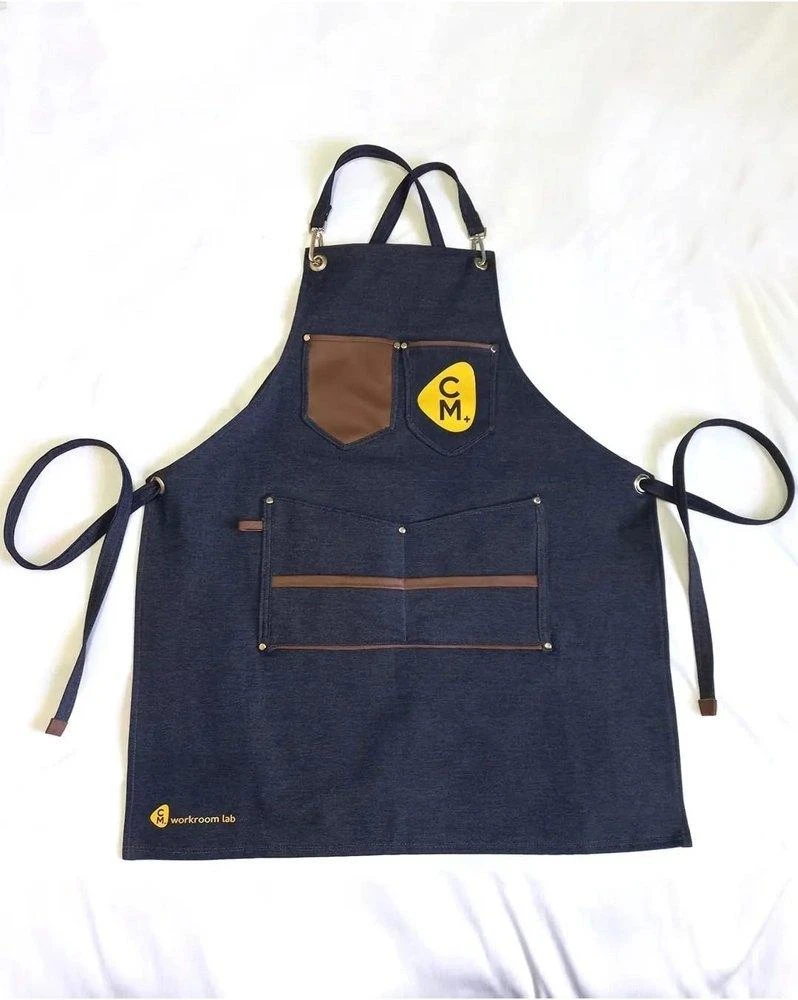
Aprons
Verified GRS Transaction Certificate
We don't ask you to take our word for sustainability. Every delivery of ReWeav® is backed by official GRS Transaction Certificates issued by Control Union, certifying 100% verified recycled content.
GRS Transaction Certificate (TC)
Shown: TC No. CUI-04962239 • Issued by Control Union Inspections & Certifications on 8 May 2026 • Seller: Radhey Krishna Cotweaving
Legally binding transaction certificate issued for every commercial delivery you receive.
100% verified chain-of-custody tracking from raw waste cutting intake to woven goods.
Contains certification body seal, QR validation link, and full seller declaration for your ESG team.
Certificate Scope Data
 Control Union Certified TC
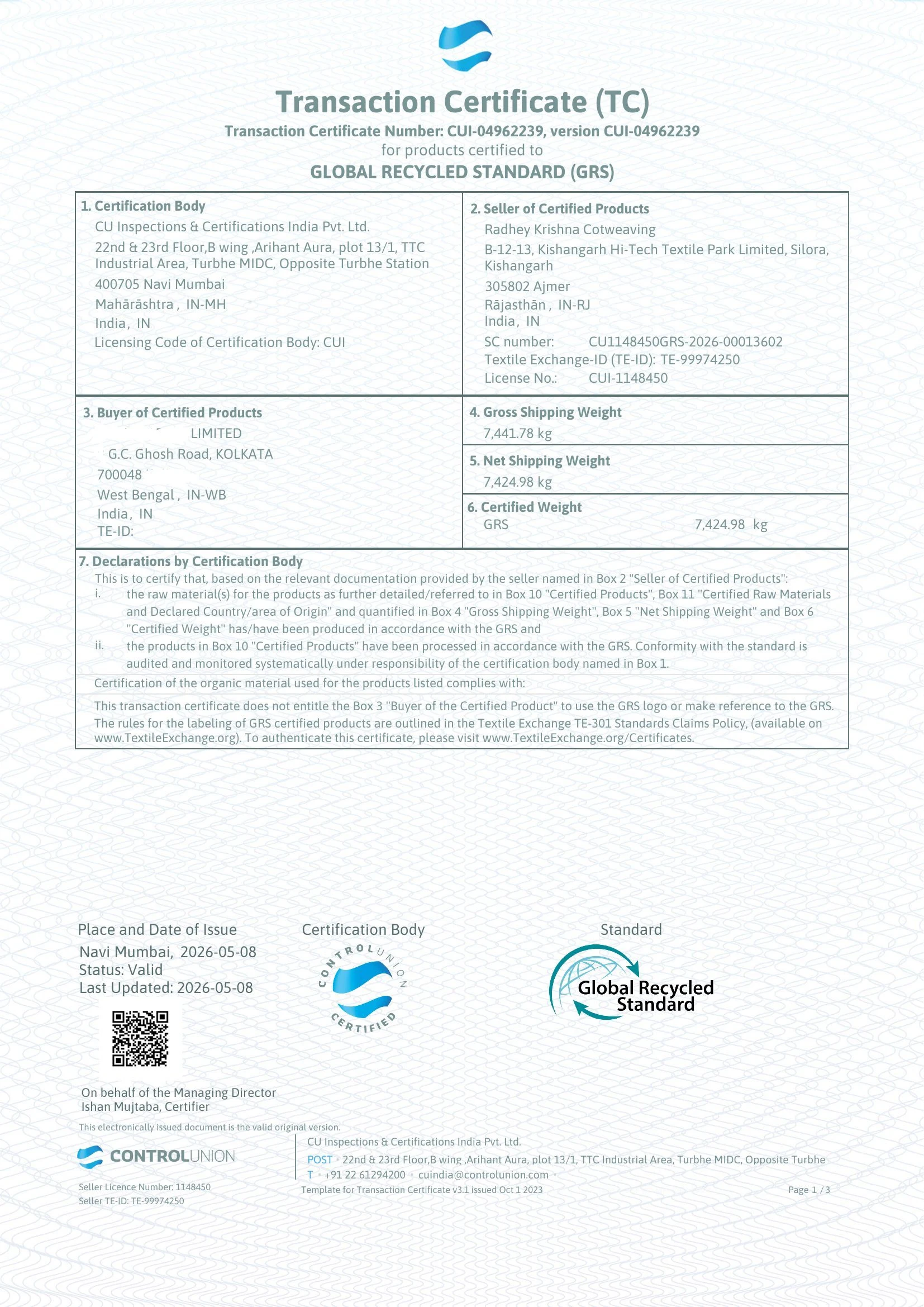
Certification Body & Scope
Box 1–7: Control Union details, Seller (Radhey Krishna Cotweaving), Gross/Net weights, GRS Declarations.
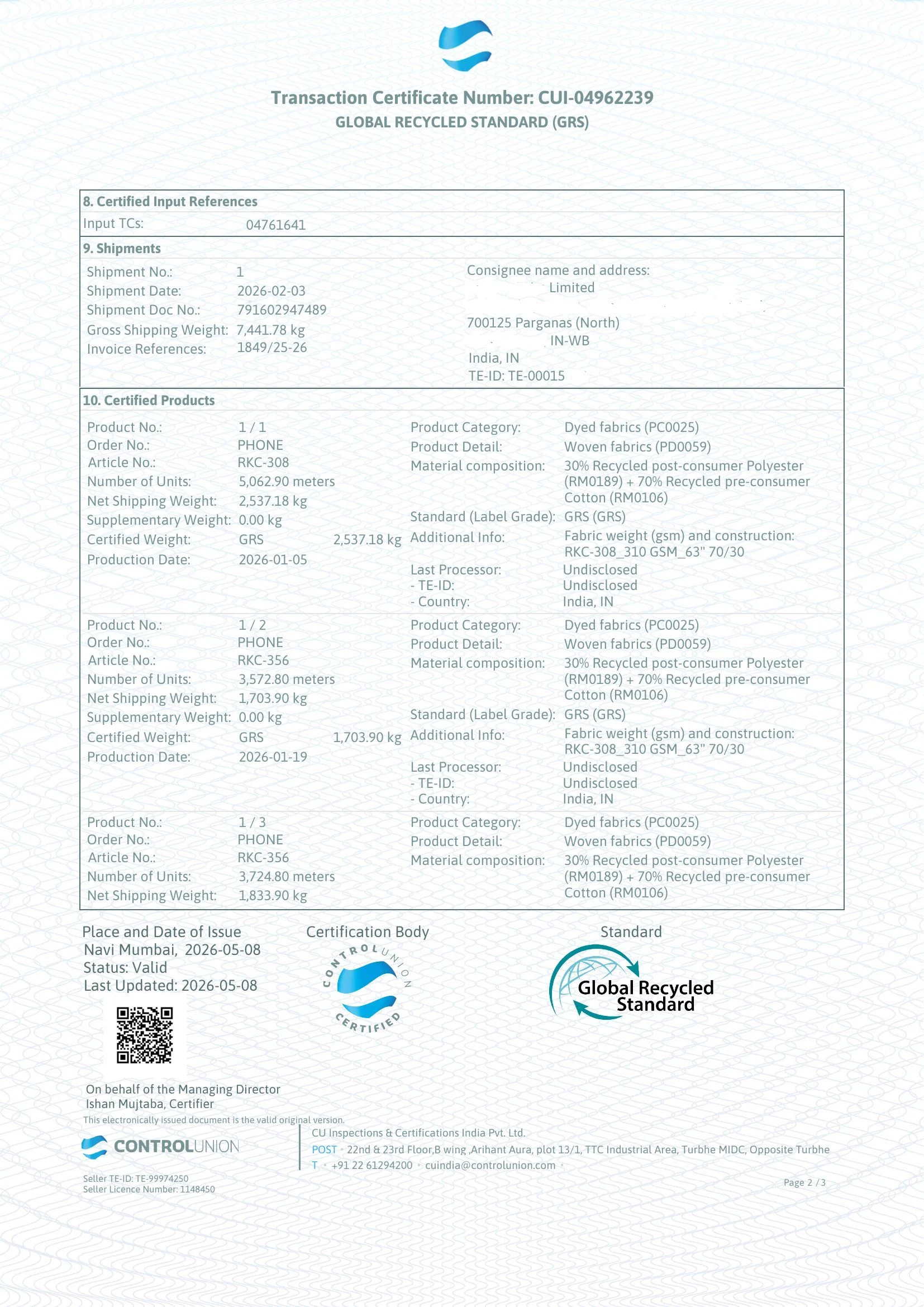
Shipment & Product Details
Box 8–10: Commercial invoice reference, buyer facility, and certified woven fabric product classification.
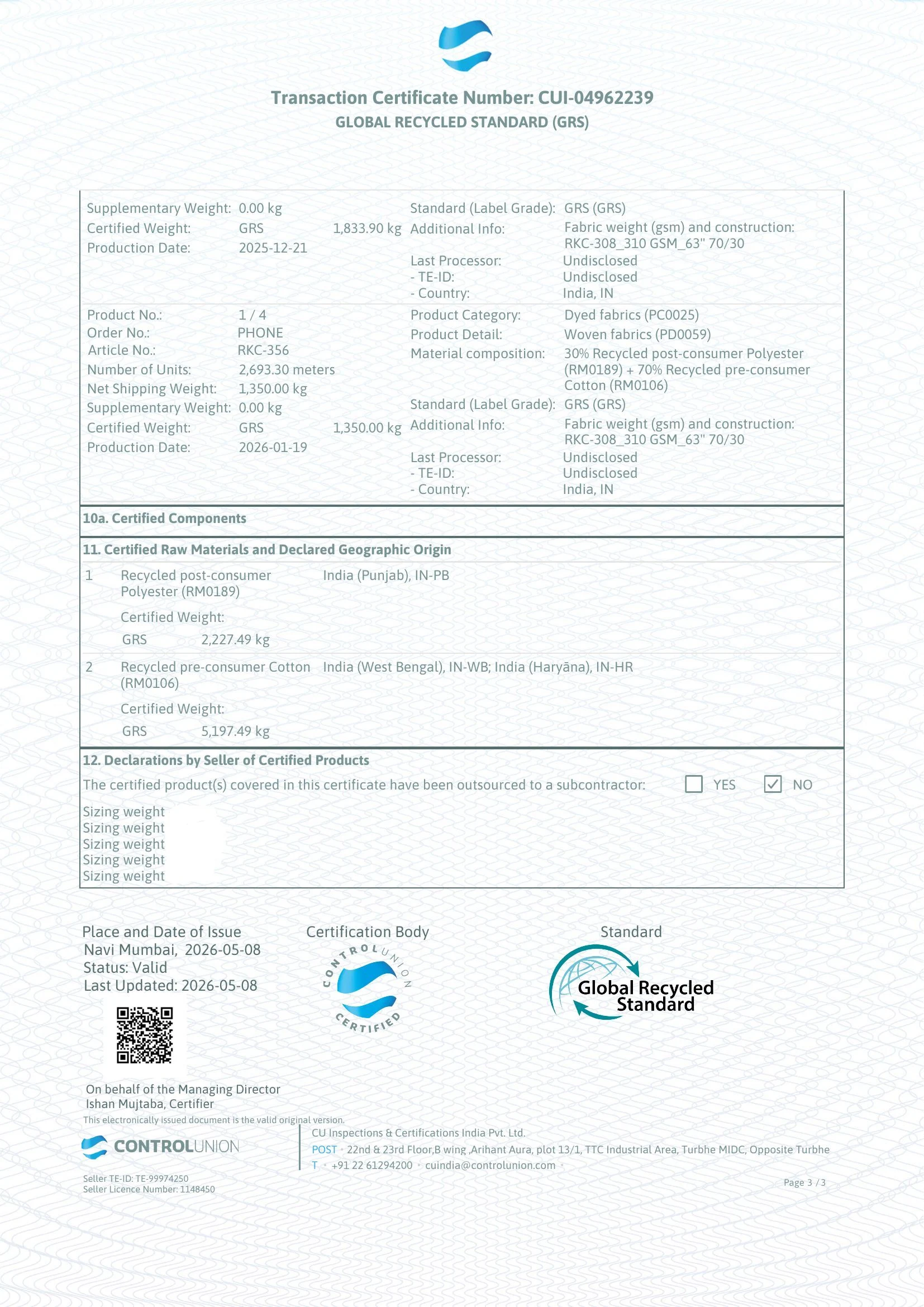
Material Origin & Declarations
Box 11–12: Raw material geographic origin (India), recycled post & pre-consumer cotton declaration.
AWARE™ Blockchain Traceability Record
Tamper-proof molecular tracer technology combined with public cryptographic blockchain records, providing complete supply chain transparency from raw waste intake to finished woven goods.
AWARE™ Traceability Record
Verified by The Movement (AWARE™), Amsterdam, The Netherlands • Product: C6611-AW • 10oz Recycled Cotton Crossbody Bag
Patented molecular tracers embedded in raw fibre verify authentic recycled feedstock via handheld scanner.
Immutable tokens created and transferred across spinner (Hisar) → weaver (Radhey Krishna) → cut & sew.
Complies with EU Textile Extended Producer Responsibility (EPR) and Eco-design regulations.
Verified Value Chain Flow
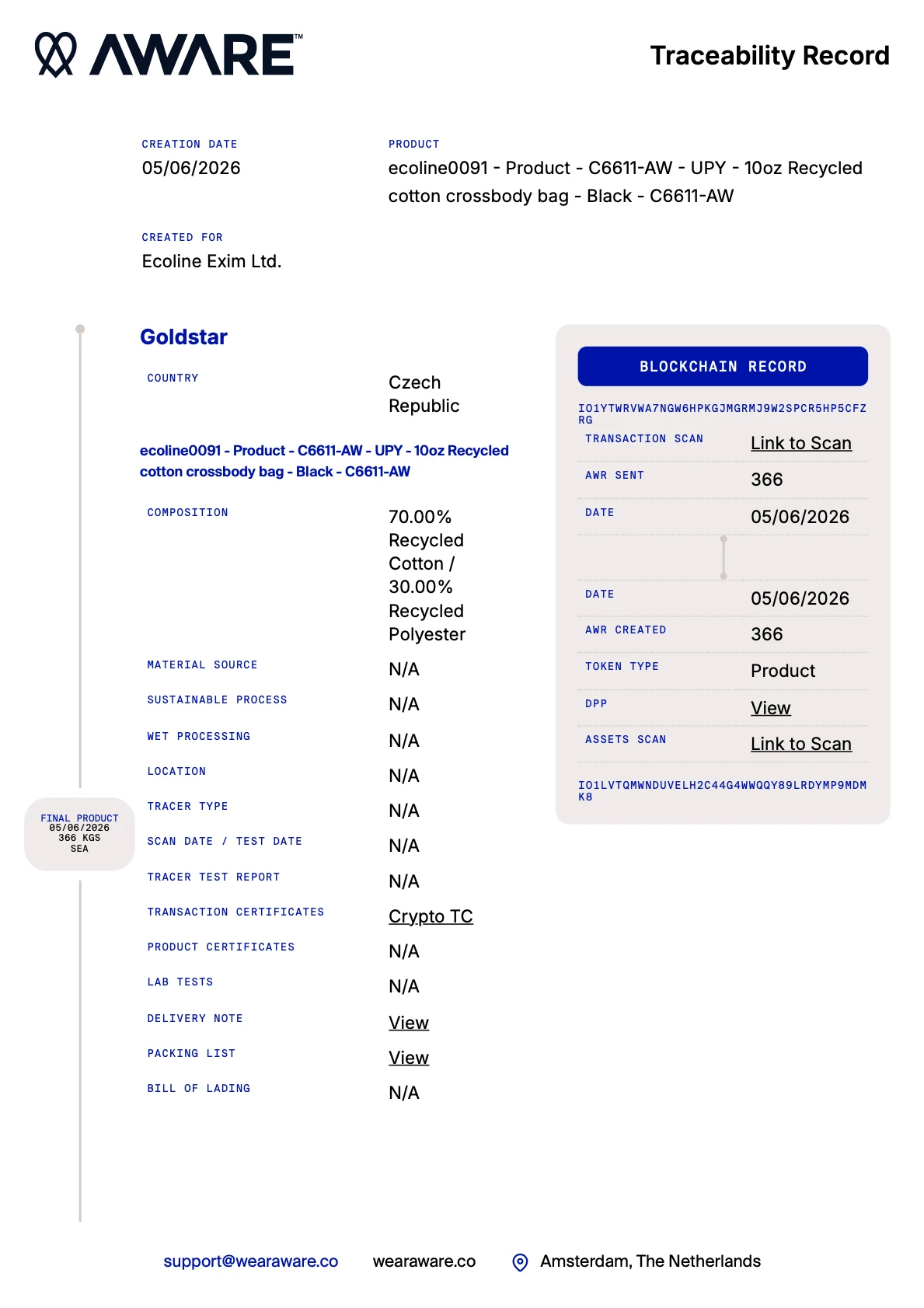
Product & Blockchain Record
Product C6611-AW, 70% Recycled Cotton / 30% rPET, Blockchain Token Scan link & export destination.
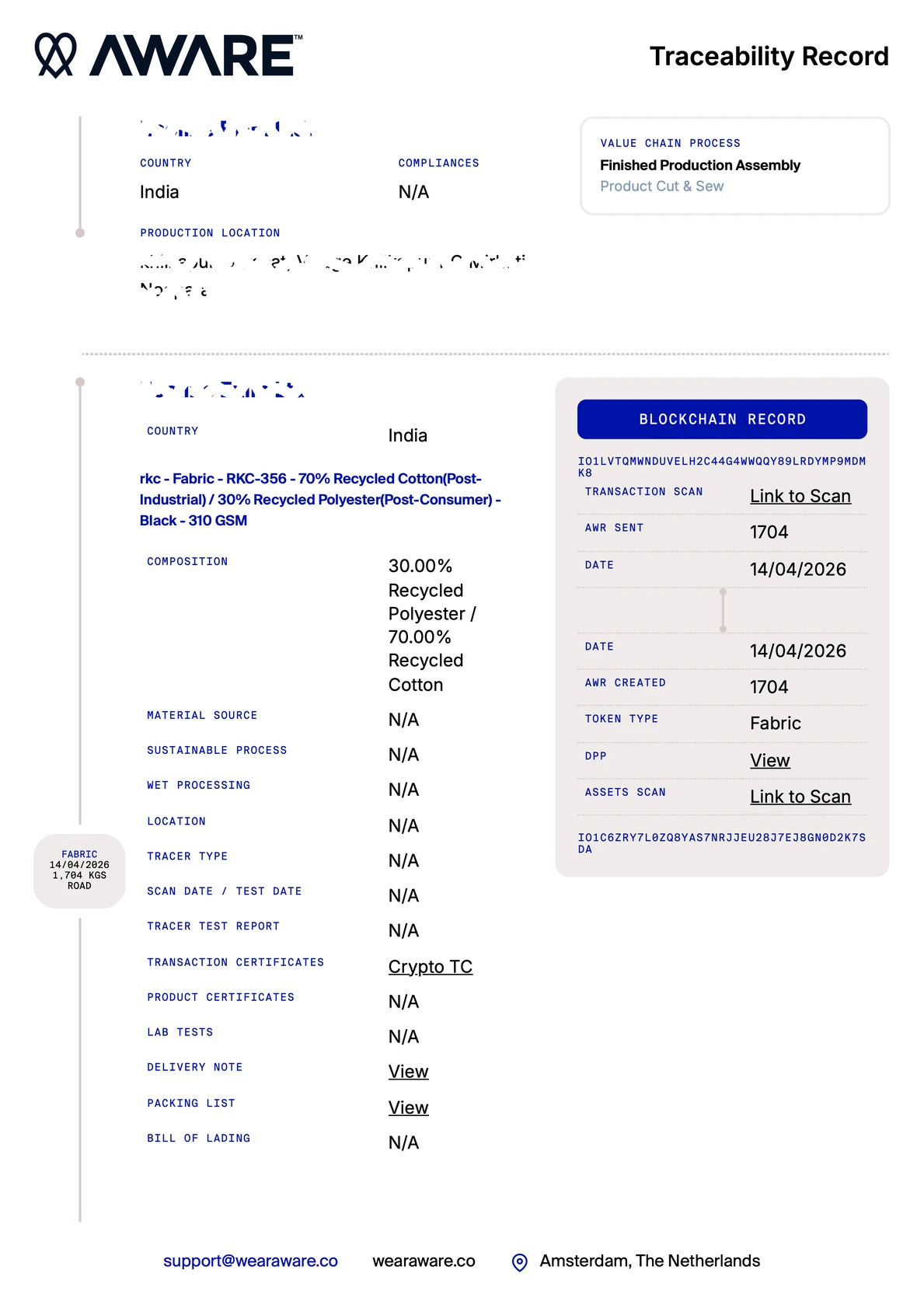
Cut & Sew Assembly
Product assembly, RKC-356 fabric (310 GSM Black), 1,704 KGS road dispatch.
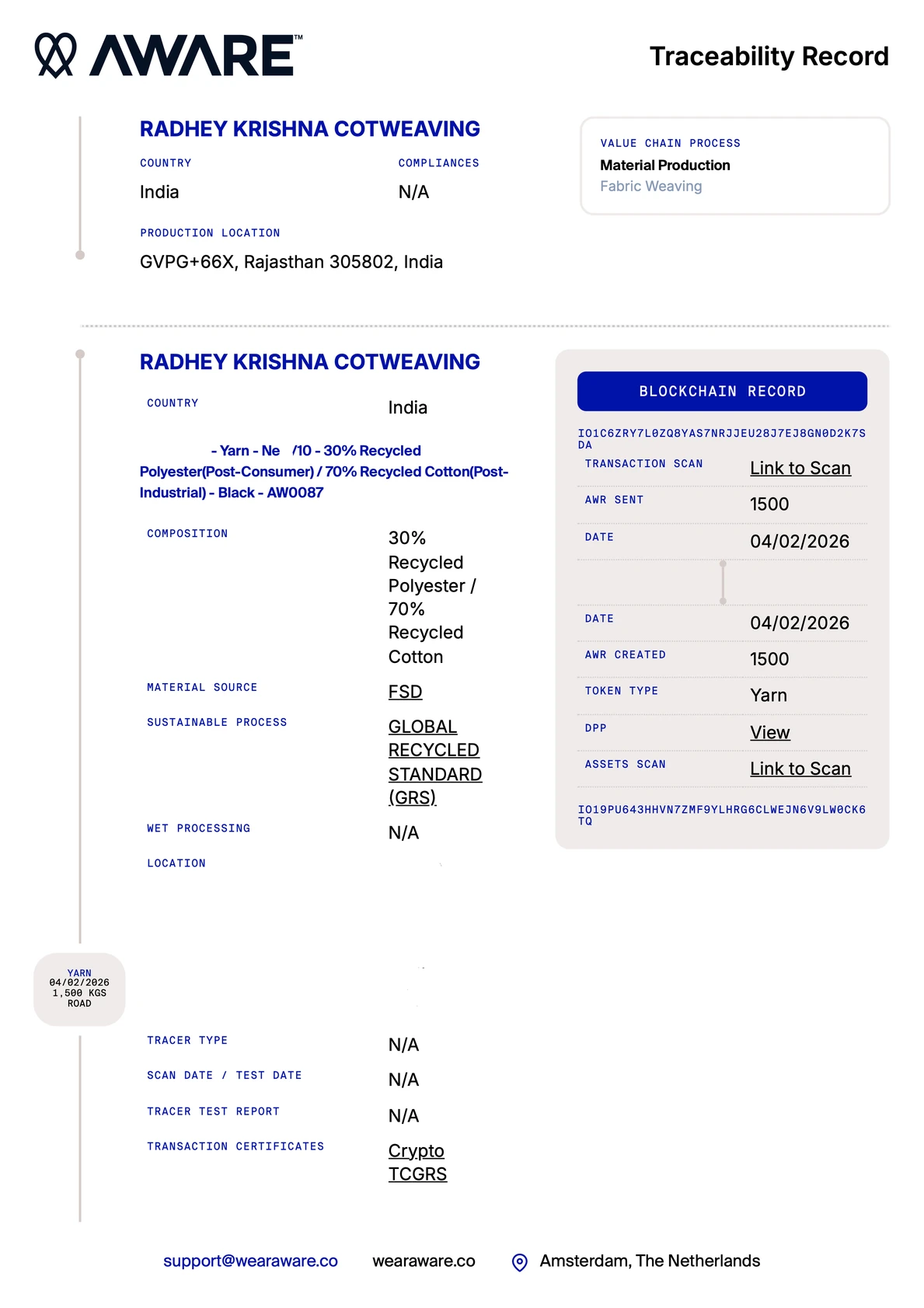
RK Cotweaving Mill Production
Radhey Krishna Cotweaving mill (Rajasthan 305802, India), Ne 2/10 yarn weaving, 1,500 KGS batch.
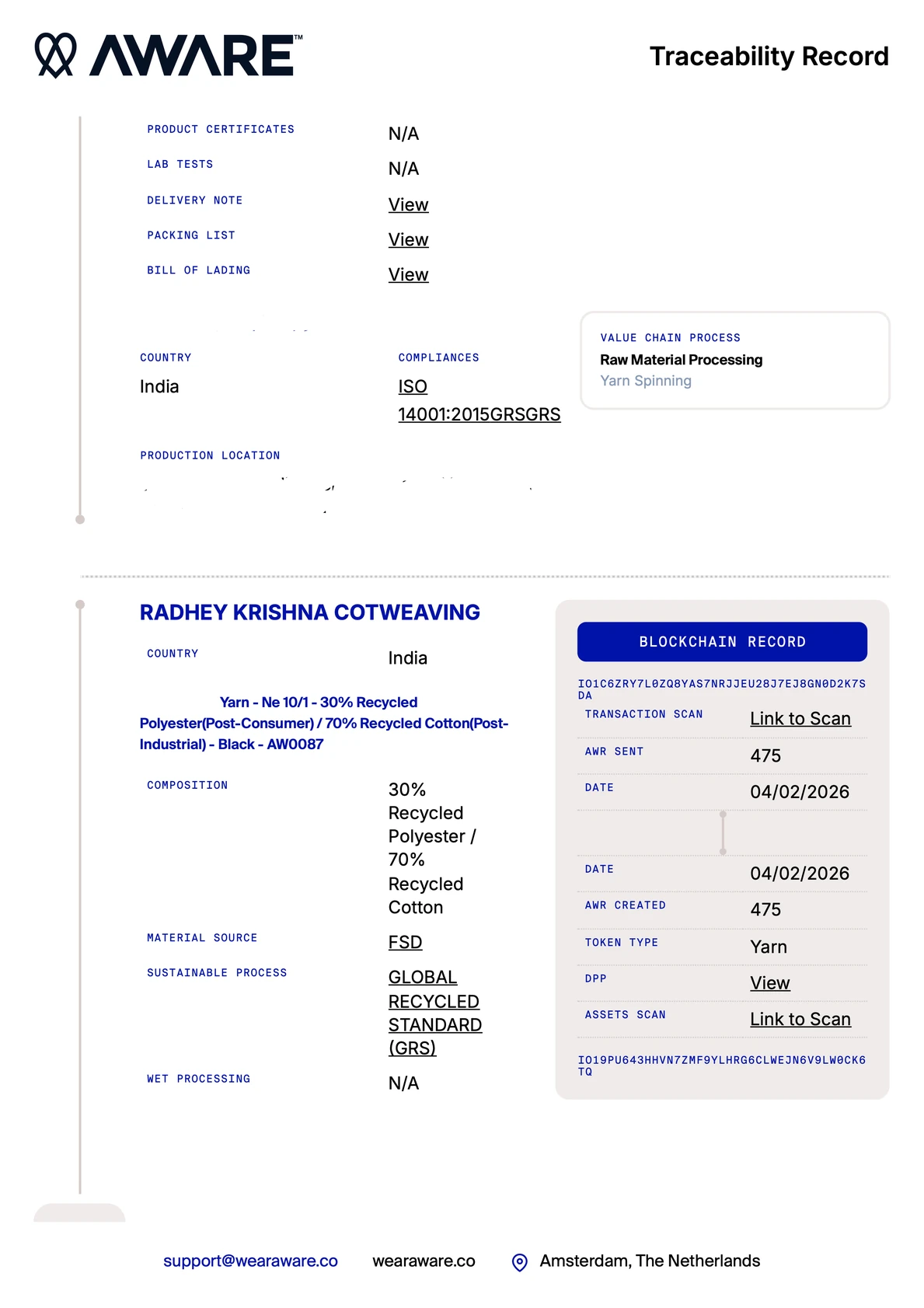
Raw Material & Yarn Spinning
Hisar Spinning Mills Ltd (Haryana, India), ISO 14001:2015 & GRS certified, Ne 10/1 recycled yarn.
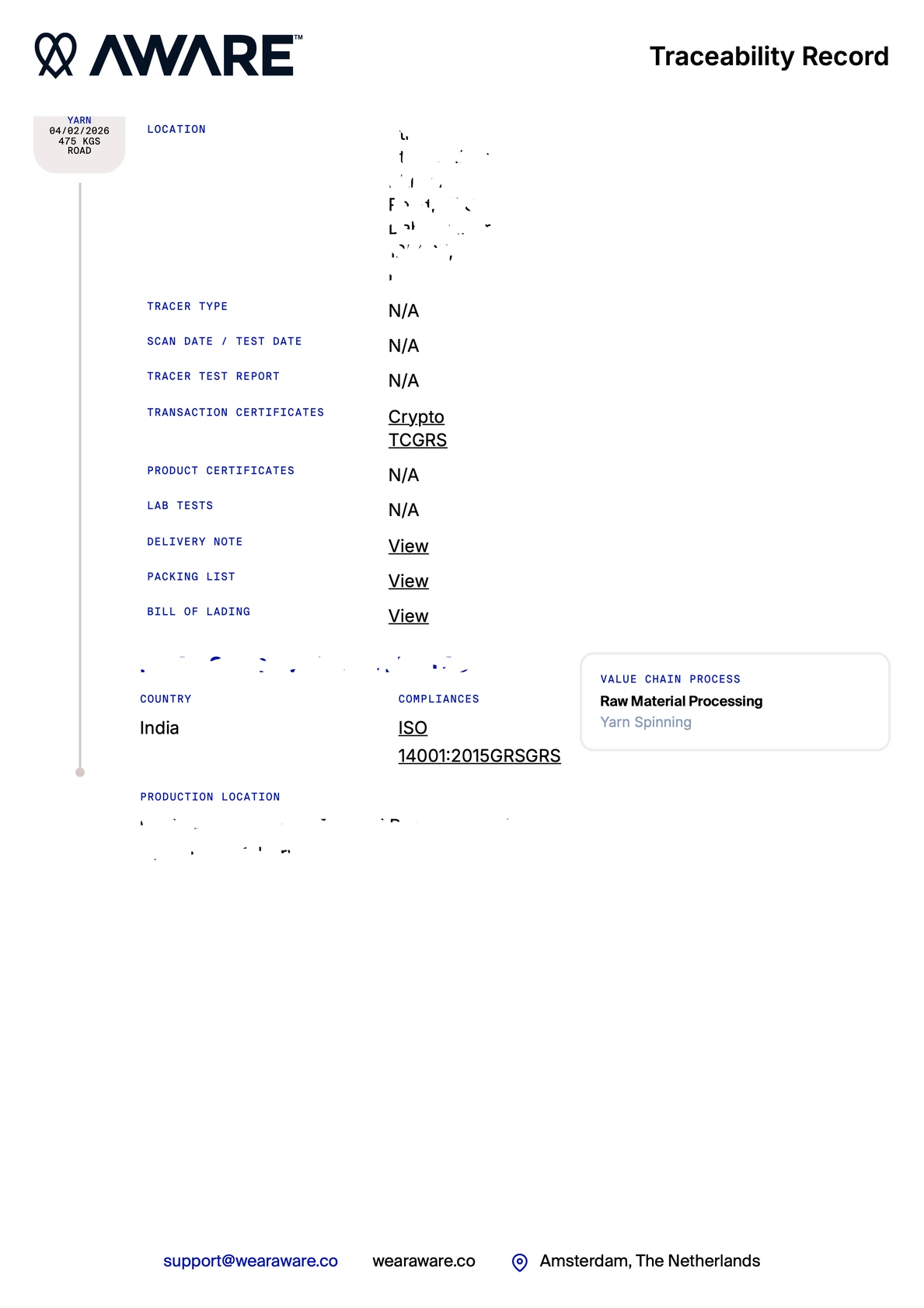
Logistics & Transport Audit
Transportation records, bill of lading, delivery note, and packing list blockchain confirmation.
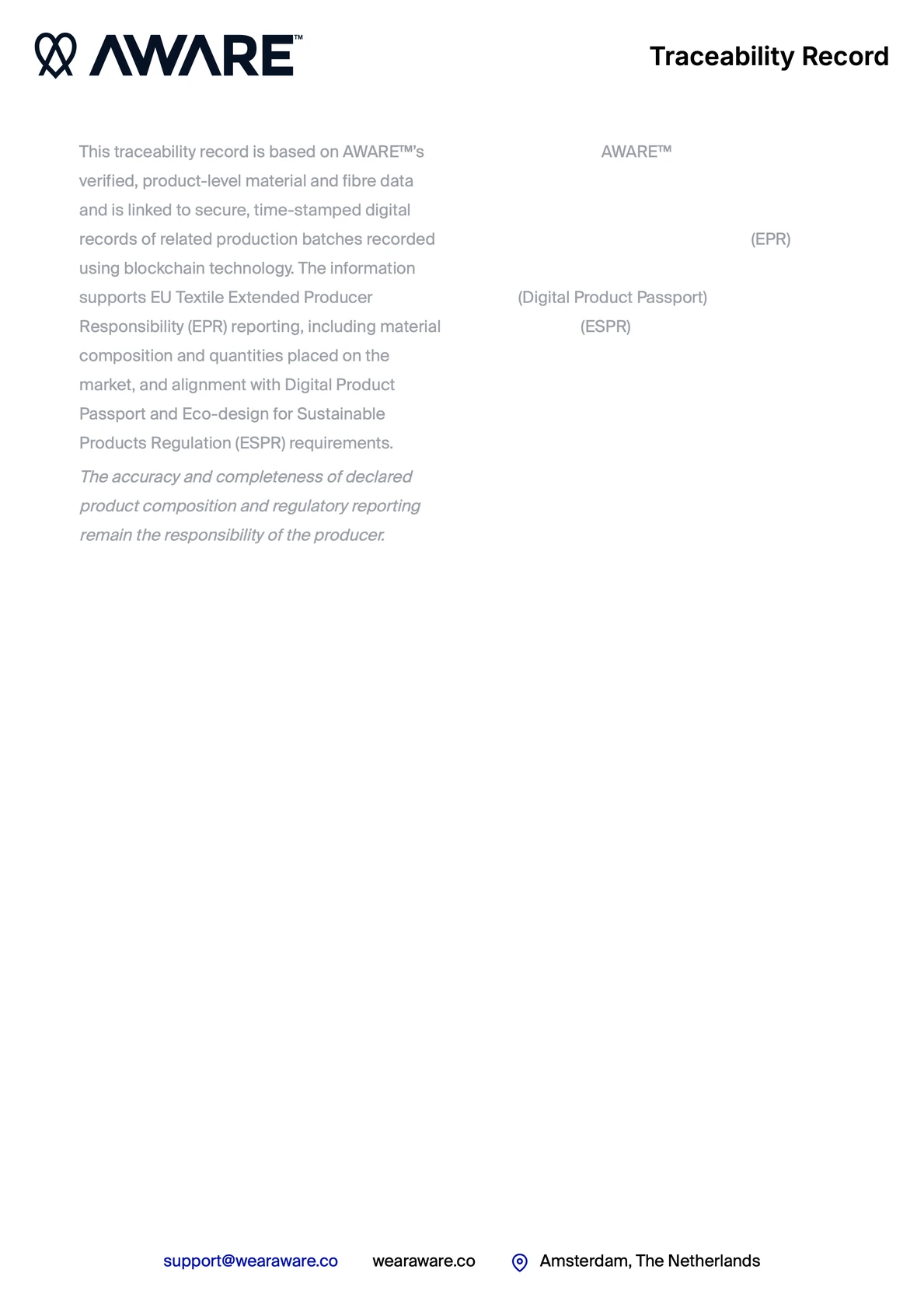
EU ESPR / DPP Statement
Regulatory alignment with EU Textile Extended Producer Responsibility and Digital Product Passport.
AWARE™ Digital Product Passport (DPP)
Official batch-level Digital Product Passport generated through AWARE™ blockchain technology. Pre-aligned with European Union Ecodesign for Sustainable Products Regulation (ESPR) and Extended Producer Responsibility (EPR) reporting.
Batch Digital Product Passport
Linked to a secure, time-stamped digital record of the material production batch • Producer: Radhey Krishna Cotweaving • Token ID: RKC-356 (310 GSM Black)
Provides verified material and fibre data supporting European Union Extended Producer Responsibility and upcoming Digital Product Passport mandates.
Immutable digital tokens (1,704 AWR Tokens created) minted on public blockchain corresponding precisely to 1,704 KGS of woven fabric.
Laboratory-confirmed composition: 70% Recycled Cotton (Post-Industrial) & 30% Recycled Polyester (Post-Consumer) with complete traceability tokens.
Passport Specification Data
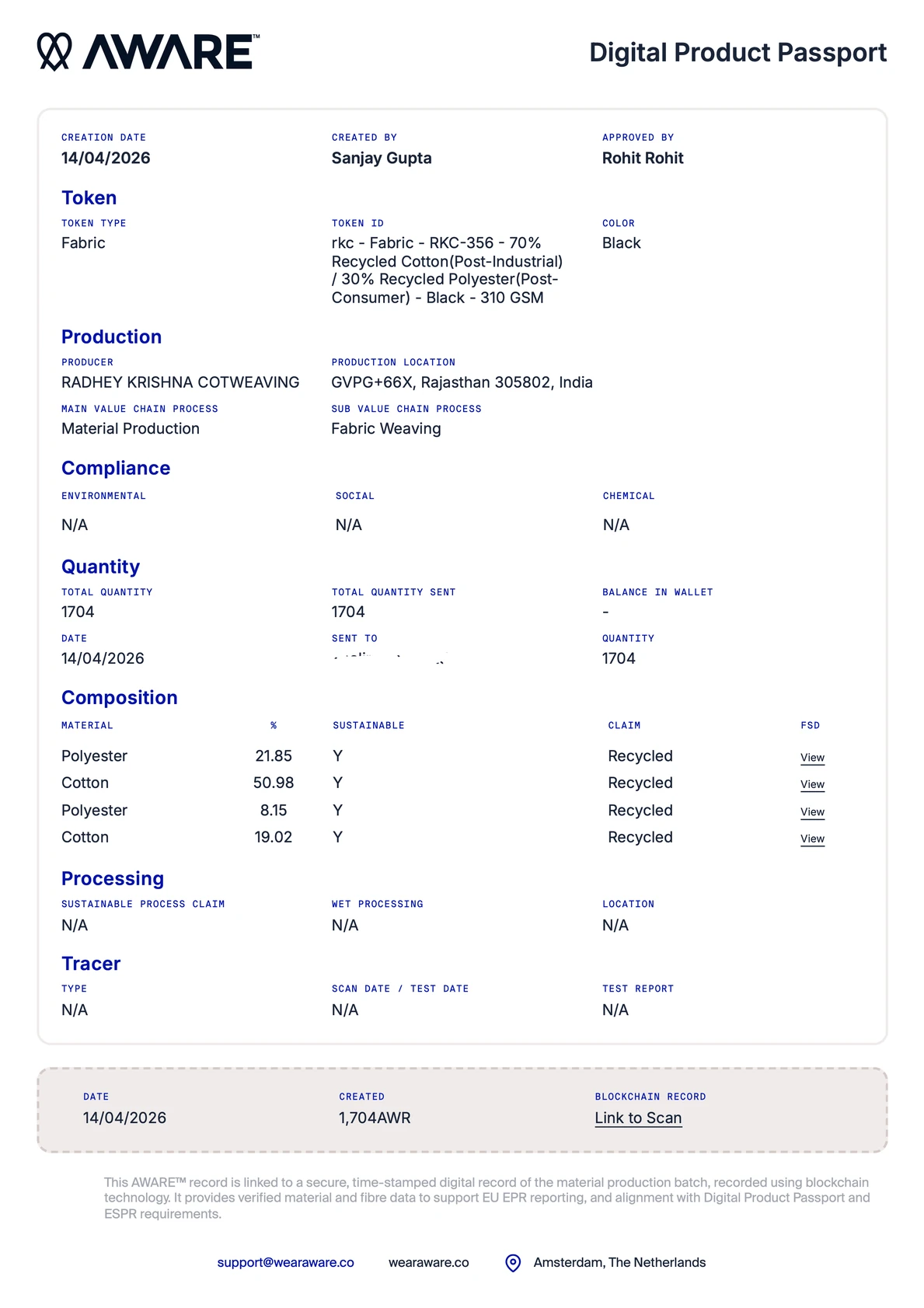
Token, Producer & Composition
Batch Token ID RKC-356, Radhey Krishna Cotweaving production, 1,704 KGS batch token, and verified 70/30 recycled breakdown.

EU Regulatory Statement
Official regulatory statement affirming alignment with EU Extended Producer Responsibility (EPR) and Ecodesign for Sustainable Products (ESPR).
AWARE™ Life-Cycle Impact Report
Independent Life-Cycle Assessment (LCA) calculated in partnership with Climatiq and verified on blockchain. Providing audit-ready carbon footprint accounting across material manufacturing and transportation.
Verified Carbon Footprint & Emissions
Batch Life-Cycle Assessment • Total Verified Carbon Impact: 690.74 kgCO₂e • Per-Item Footprint: ~0.10 kgCO₂e
Calculated in partnership with Climatiq using globally benchmarked life-cycle assessment standards, ensuring high integrity for Scope 3 emissions reporting.
Transparent emissions accounting: 371.93 kgCO₂e from raw material production (53.8%) and 318.81 kgCO₂e from transport logistics (46.2%).
All activity data points and emission calculations are recorded and made tradable through immutable AWARE™ blockchain digital tokens.
Verified Carbon Impact Data
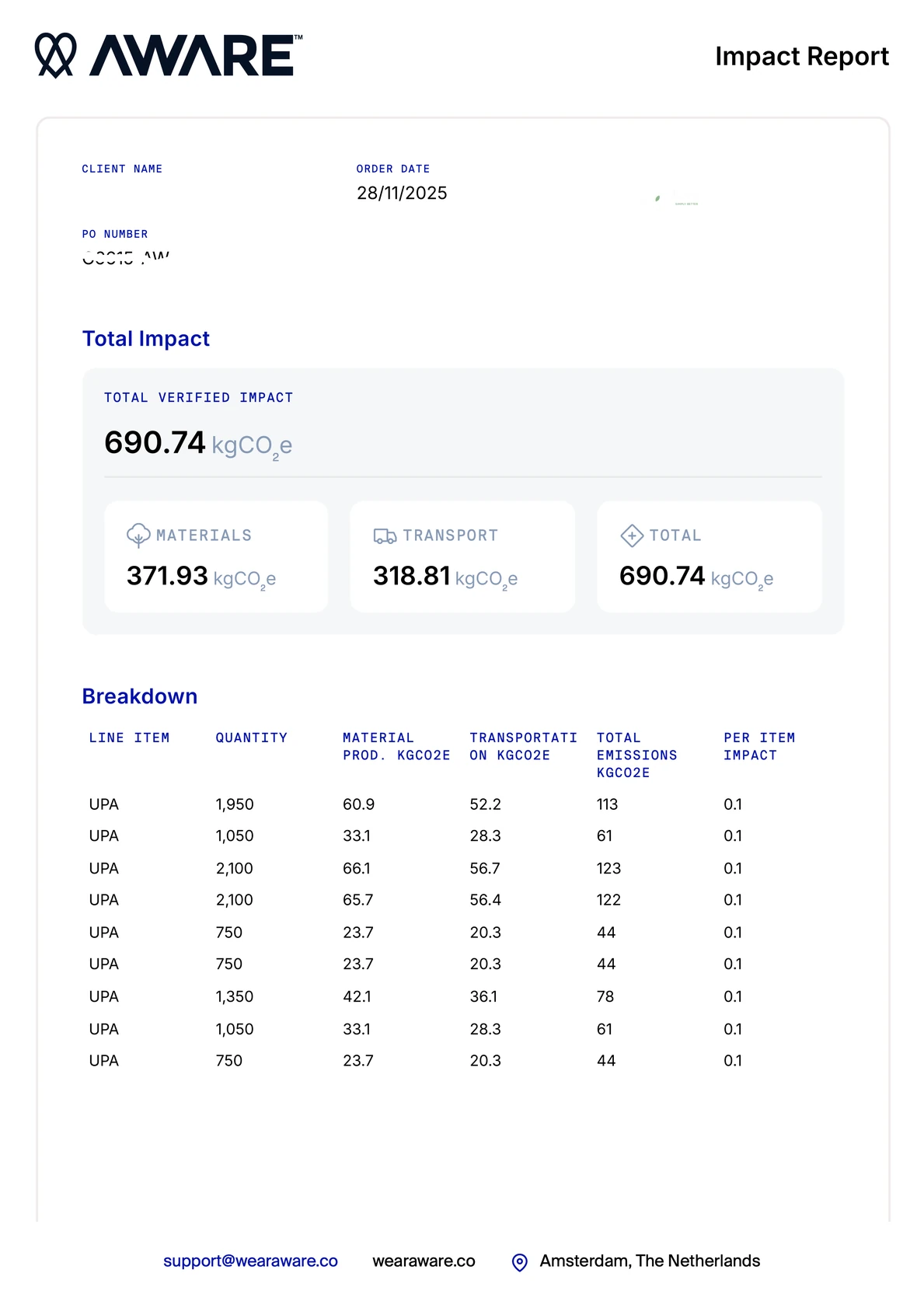
Carbon Impact & Line-Item Breakdown
Total 690.74 kgCO₂e carbon footprint, materials (371.93 kg) vs transport (318.81 kg), and line-item impact.
LCA Methodology & Climatiq Verification
ISO 14040/14044 life-cycle assessment standards overview, blockchain data tokenization, and Climatiq partnership.
How impact is measured — and what to consider
Methodology comparing recycled cotton against virgin cultivation, alongside key operational and commercial considerations for brands choosing AWARE™ blockchain verification.
Water savings
Compared with the same fabric in virgin cotton: water to grow the crop plus water used to dye the cotton content.
CO₂ emissions
Full material handling and manufacturing — transport, fabric production, electricity and fuel — compared with virgin cotton.
Key considerations
- Blockchain traceability. A unique QR code per product traces its journey.
- Manufacturer-funded. Cost depends on volume and commitment; back-chain traceability to be confirmed.
- Full transparency. Buyers must be comfortable disclosing the complete supply chain.
- Higher cost than GRS. AWARE™ charges per product; GRS is based on fabric quantity.
- Best for buyers who need complete blockchain-based traceability.
Document Inspection
3-Layer Traceability & Transparency
ReWeav redefines fabric authenticity with strict sustainability standards at every stage of production.
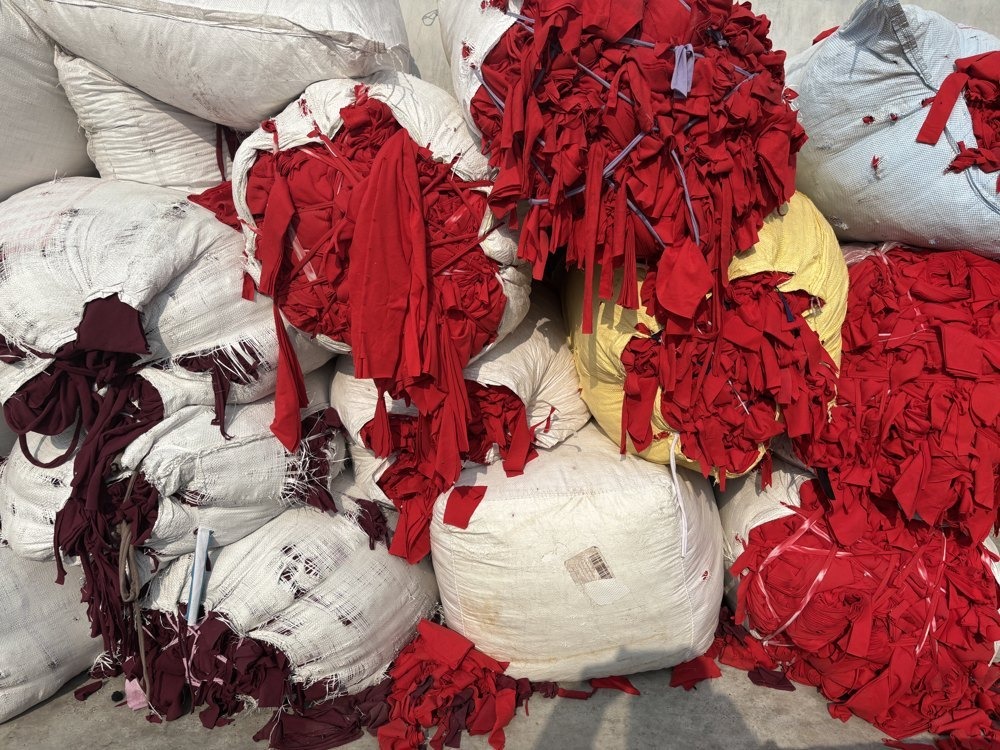
1 · Source
Pre-consumer cotton textile waste and post-consumer PET bottles, held to strict sustainability standards.
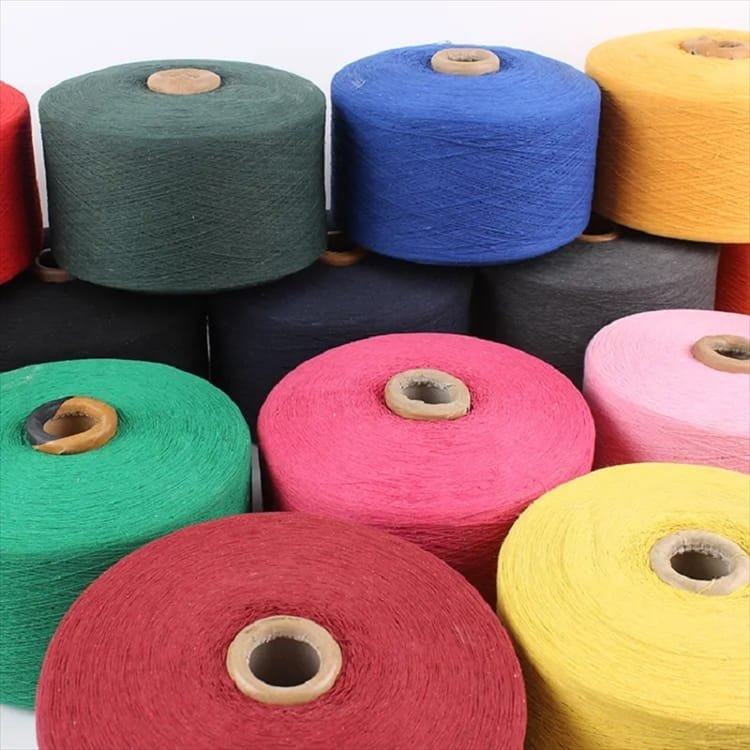
2 · Recycling
Skilled hands break waste down into fibre and rebuild it as premium raw material.
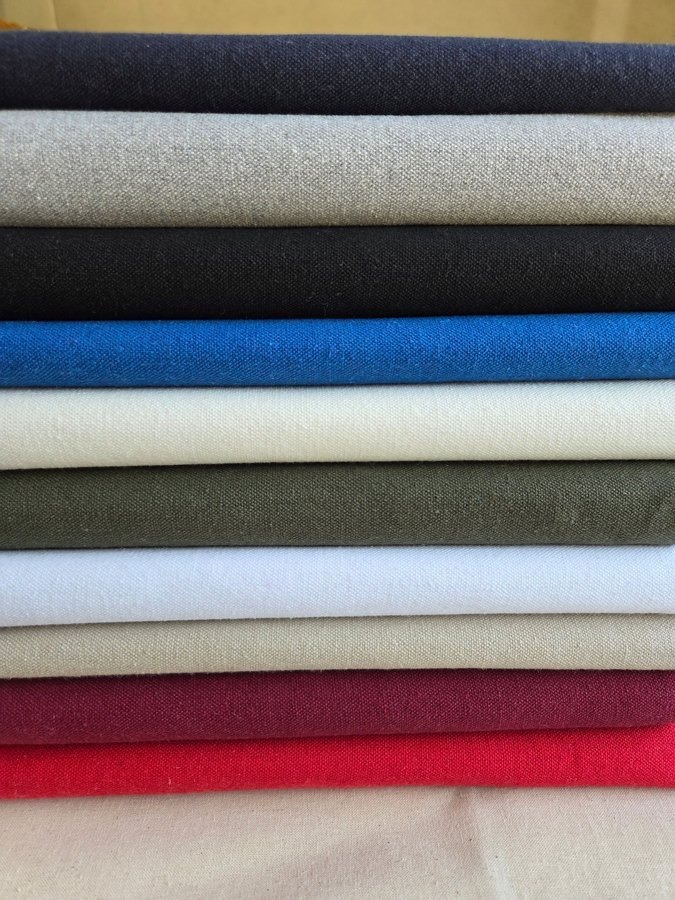
3 · Creation
ReWeav® fabric is woven in our own facility — every thread, every step accounted for.
Our Official Certifications
Every batch of ReWeav® meets stringent international environmental, social, and chemical safety criteria.
Global Recycled Standard
Verified pre-consumer and post-consumer recycled content with full chain-of-custody tracking.
View GRS Details →
Recycled Claim Standard
Strict third-party certification of recycled input materials and transparent production tracking.
View RCS Details →
Aware™ Physical Tracer
Embedded micro-particle tracer validating genuine recycled feedstock from spinning to finished fabric.
View Aware™ Details →ReWeav Fabric Video
Frequently Asked Questions About ReWeav®
Everything you need to know about our certified recycled cotton and rPET fabric manufacturing.
ReWeav® is engineered as a true circular fabric solution manufactured by RK Cotweaving in India. It is produced from 100% recycled inputs, combining verified pre-consumer garment cutting waste and post-consumer recycled PET bottles. Crucially, the fabric itself is designed to be mechanically shredded and re-spun into yarn at the end of its useful life, achieving textile-to-textile circularity without downcycling.
In the ReWeav® process, garment cutting waste and recycled PET are sorted by colour at the collection stage before being mechanically shredded into fibres. Because the colour comes directly from the raw waste stream, zero dyeing water, harmful chemicals, or synthetic dyestuffs are required during production.
RK Cotweaving operates a dedicated near-zero wastage policy by diverting textile scraps and plastic bottles from landfills into premium textiles. Our weaving mill in Kishangarh, Rajasthan runs on 100% renewable solar and wind power, eliminating grid emissions and ensuring a zero-carbon energy footprint for fabric manufacturing.
Every metre of ReWeav® fabric is independently traceable via Global Recycled Standard (GRS) Transaction Certificates, Recycled Claim Standard (RCS), and Aware™ digital verification. Physical tracer particles are embedded into the recycled fibres at source, allowing instant verification via handheld scanners alongside a tamper-proof digital product passport.
ReWeav® is produced in weights ranging from 180 GSM to 380 GSM across Plain Canvas, Drill, and Twill weaves. Custom blends (e.g. 70% recycled cotton / 30% recycled polyester) and custom weave specifications are available for bulk orders starting at 500 metres per shade.
Yes. By blending long-staple recovered cotton with high-tenacity recycled polyester (rPET) in optimized ratios (typically 70/30 or 60/40), ReWeav® delivers tensile strength, tear resistance, and abrasion performance comparable to virgin canvas, making it ideal for retail tote bags, aprons, workwear, and footwear.
Choose RK Cotweaving for All Your Recycled Fabric Needs
Feel the difference in quality and comfort with our GRS-certified, sustainable recycled textile solutions.