

Traceability in Textile: Why It’s the Future of a Sustainable Fashion Industry
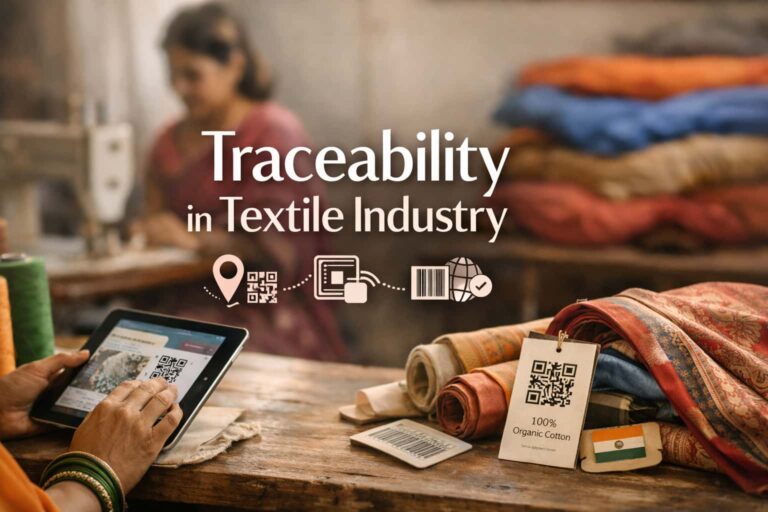
The fashion and textile industry is undergoing a major transformation driven by sustainability, ethical practices, and customer demand for transparency. As brands market products with claims like eco-conscious, green, and sustainable, the rise of greenwashing, misleading or false sustainability claims, has created distrust among consumers.
Today’s customers are smarter and more conscious than ever. They want to know the origin of materials, manufacturing processes, and the impact on people and the planet. This demand for accountability has placed traceability in Textile industry at the centre of sustainable fashion strategies. The growing focus on textile traceability reflects a global shift toward verified, transparent, and responsible supply chains.
What is Traceability in Textile Industry?
Traceability in the textile industry refers to the ability to track and record every step in a textile product’s life cycle, starting from the raw material source to fabric production, garment manufacturing, distribution, retail, and finally recycling or disposal. It is a process that ensures complete visibility and accountability across the entire textile supply chain.
In simple terms, it answers key questions such as: Where did the raw material come from? Which factory produced the fabric? Under what conditions was the garment made? This transparency is essential for verifying sustainability claims, ensuring ethical labour practices, and maintaining product quality standards.
With increasing consumer demand for sustainable and eco-friendly textiles, traceability has become a cornerstone for building trust between brands and customers.
It provides critical information like:
- Where the raw materials were sourced
- How and where fabrics were processed
- Which facilities were involved in manufacturing
- Environmental and social impact at each stage
By implementing traceability in the textile supply chain, brands can offer transparency, reduce greenwashing, and build consumer trust.
Why is Traceability Important in Textiles?
The importance of traceability in textiles goes far beyond being a marketing trend; it is essential for sustainability, compliance, and risk management in the modern textile supply chain. With fashion brands facing increasing scrutiny for ethical sourcing and environmental impact, traceability ensures that every step, from fibre production to final garment delivery, is documented and verified.
It empowers manufacturers to maintain transparency, meet global standards, and build consumer trust while preventing greenwashing practices. In short, traceability is no longer optional but a fundamental requirement for responsible and competitive textile businesses, and here’s why it matters:
- Builds Consumer Trust – Customers can verify if the product truly meets ethical and eco-friendly claims.
- Supports Sustainability – Helps brands measure and reduce environmental impacts like water and energy consumption.
- Prevents Greenwashing – Ensures accurate labelling and sustainability claims.
- Compliance with Global Standards – Many international regulations now require supply chain transparency.
Traceability creates a data-driven approach to sustainability, helping brands achieve credibility in an increasingly conscious market.
Environmental Impact: Why Traceability is Urgent
The textile industry is one of the most resource-intensive sectors in the world, with a significant impact on the environment. Every stage of textile production, from growing raw materials to processing and finishing fabrics, demands substantial amounts of water, energy, and chemicals. Without proper monitoring, these processes can lead to excessive resource depletion, pollution, and greenhouse gas emissions. This is where traceability in fabric production becomes essential, as it helps brands and manufacturers understand their supply chain’s environmental footprint and identify areas for sustainable improvement.
- Producing a single conventional cotton T-shirt requires 2,700 litres of water.
- Polyester, one of the most widely used fibres, requires 125 MJ of energy per kg and emits 14.2 kg of CO₂ per kg.
Such numbers highlight why traceability in fabric production is crucial for responsible sourcing and identifying opportunities to adopt eco-friendly alternatives like organic cotton or recycled polyester.
Challenges in Implementing Traceability in Textile Manufacturing
While traceability sounds ideal, implementing it across a global and dispersed supply chain is challenging. Key obstacles include:
- Dispersed Supply Chain: The textile supply chain is highly fragmented and spans across multiple countries, making it extremely difficult to maintain visibility at every stage. For example, cotton might be sourced from India, wool from Australia, yarn from Vietnam, and fabrics from China before the final garment reaches the consumer. Each stage involves different stakeholders, regulations, and logistics systems, which adds complexity. Without advanced technologies like digital traceability systems, it becomes nearly impossible to track these touchpoints accurately and ensure ethical and sustainable practices throughout the process.
- High Cost for Brands and Consumers: Implementing traceability systems in textiles significantly increases operational and production costs for brands. For instance, organic cotton is 20–30% more expensive than conventional cotton, and recycled polyester comes at a premium compared to virgin polyester. These higher costs often get passed on to the end consumer, making sustainable fashion appear less affordable. Additionally, brands need to invest in certifications, auditing systems, and compliance measures, which further adds to the financial burden. While these costs promote transparency and sustainability, they can create barriers for widespread adoption, especially in price-sensitive markets.
- Lack of Technology Adoption: Despite growing awareness of sustainability, many small and medium-sized textile manufacturers still lack the necessary digital infrastructure for traceability implementation. Advanced solutions like blockchain, RFID tagging, and IoT-based tracking systems require significant investment and technical expertise, which can be challenging for smaller players. As a result, large portions of the supply chain remain opaque, making it difficult to verify sustainability claims or ensure compliance with ethical standards. Bridging this technology gap is crucial for achieving full-scale traceability in the textile industry.
How Technology is Driving Digital Traceability in Textiles
Technology plays a critical role in enabling digital traceability in textiles. Some innovations include:
- Blockchain Solutions – Provides immutable records of the entire supply chain, ensuring trust and transparency.
- IoT and Smart Tags – Sensors and QR codes that store product data, allowing consumers to scan and verify details.
- AI-Powered Analytics – Helps monitor supply chain performance, sustainability metrics, and compliance.
These solutions are helping brands fight greenwashing, meet regulatory requirements, and maintain consumer trust.
Benefits of Traceability in the Textile Industry
Adopting traceability brings numerous benefits
- Transparency & Trust – Builds brand credibility by proving sustainability claims.
- Better Risk Management – Detects unethical practices or non-compliance quickly.
- Improved Sustainability – Enables brands to optimise resources and reduce waste.
- Competitive Advantage – Consumers prefer brands that are open and responsible.
Future of Traceability and Transparency in Fashion
As sustainability becomes non-negotiable, traceability for sustainable textiles is set to evolve from a value-added feature to an industry-wide standard. Leading fashion brands and textile manufacturers are already investing in end-to-end visibility, leveraging advanced technologies such as blockchain, AI, and IoT-enabled tracking systems to ensure authenticity and ethical sourcing.
Government regulations, international compliance standards, and eco-certifications will further accelerate the shift toward 100% supply chain transparency, making it mandatory rather than optional.
In the near future, consumers will demand complete visibility before making a purchase, and brands that fail to implement traceability risk losing credibility and market share. Ultimately, traceability will not only strengthen sustainability claims but also build trust and accountability across the global textile industry.
How Radhey Krishna Cotweaving Implements Traceability in Textile Manufacturing
Radhey Krishna Cotweaving supports traceability in Textile Industry through controlled sourcing, process documentation, and audited production workflows across its manufacturing operations. The company produces greige and finished fabrics, ensuring batch-level identification from yarn procurement to fabric dispatch.
At Radhey Krishna Cotweaving, traceability is supported through globally recognised certifications including GOTS, GRS, RCS Blended, OEKO TEX Standard 100, BCI, OCS 100, Fairtrade, and Aware, ensuring verified sourcing, responsible manufacturing, and transparent textile supply chains. Digital traceability systems, inspection protocols, and compliance audits enable consistent quality assurance and regulatory alignment globally.
Conclusion
Traceability is the backbone of a truly sustainable and ethical textile industry. It bridges the gap between brands and consumers, eliminates greenwashing, and promotes responsible production. Traceability in Textile industry is no longer optional; it is essential for building trust, ensuring compliance, and proving sustainability claims.
At Radhey Krishna Cotweaving, we are committed to sustainability by using OEKO-TEX certified fabrics, 100% renewable energy, and recyclable materials. Our goal is to maintain complete transparency, ensuring every product reflects our promise of quality and responsibility.
Contact us today to learn more about our certified, traceable textile solutions and request a quote.
FAQs
1.What is traceability in the textile industry?
Traceability in the textile industry means tracking and documenting every stage of a product’s lifecycle, from raw material sourcing and fibre processing to fabric production, garment manufacturing, distribution, and recycling, ensuring transparency, compliance, sustainability verification, and accountability across supply chains.
2.Why is traceability important in the textile supply chain?
Traceability is important because it prevents greenwashing, builds consumer trust, ensures regulatory compliance, improves risk management, supports sustainability goals, verifies ethical sourcing, measures environmental impact, and provides brands with data to make responsible, transparent, and informed decisions across supply chains.
3.How does technology improve textile traceability?
Technology improves textile traceability by enabling real-time data capture through blockchain, QR codes, smart tags, and AI analytics, allowing brands to monitor supply chains, verify certifications, prevent fraud, enhance compliance, and offer consumers transparent access to product origin information globally.
4.What are the main challenges in implementing textile traceability?
The main challenges in implementing textile traceability include fragmented supply chains, high implementation costs, limited digital infrastructure, inconsistent data standards, and lack of technical expertise, which together make achieving end-to-end visibility, verification, and compliance across multiple stakeholders complex and intensive.
5.What are the benefits of traceability in fabric production?
Traceability in fabric production ensures ethical sourcing, improves transparency, supports certification compliance, reduces environmental impact, strengthens risk management, and helps brands deliver verified sustainability claims, higher product quality, and responsible manufacturing practices to conscious consumers and global fashion markets worldwide.
6.How do certifications support traceability in the textile industry?
Certifications support traceability in the textile industry by enforcing chain-of-custody documentation, third-party audits, material verification, and compliance checks, ensuring fibres, processes, and finished products meet recognised environmental, social, and quality standards across every stage of textile supply chains globally consistently.
7. How does traceability benefit textile manufacturers and buyers?
Traceability benefits textile manufacturers and buyers by improving supply chain visibility, reducing compliance risks, strengthening trust, enabling informed purchasing decisions, supporting sustainability goals, ensuring certification credibility, and creating long-term competitive advantage in increasingly regulated, transparency-driven global textile markets worldwide.