
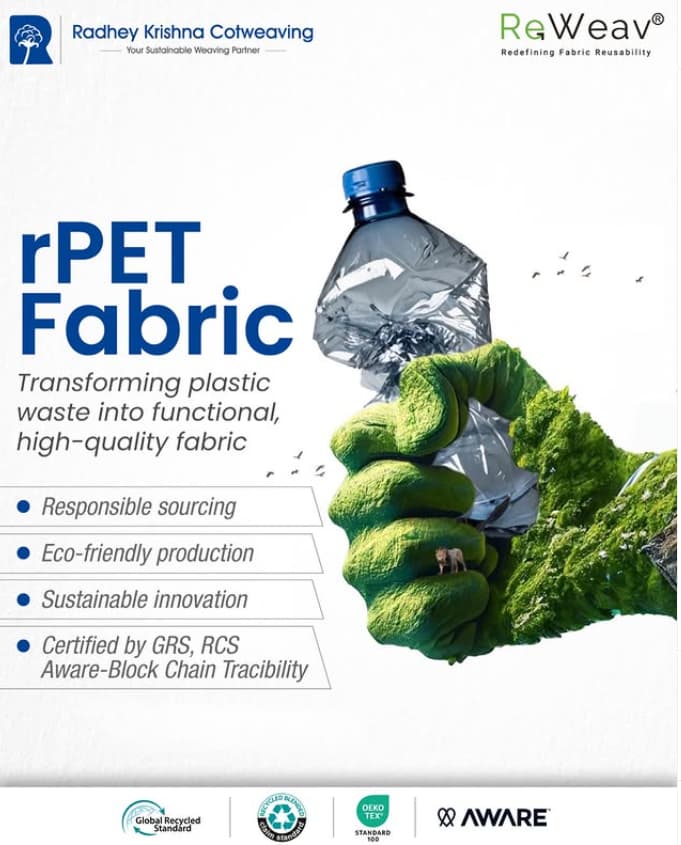
Recycled PET Fabric: Transforming Waste into Sustainable, High-Performance Textiles
The textile industry is increasingly aligning with sustainability-driven manufacturing, andRecycled PET fabrichas become one of the most practical materials supporting this transition. Developed from recycled plastic waste, this fabric reduces environmental impact while maintaining the durability and versatility expected from polyester textiles.Radhey Krishna Cotweavingmanufactures certified Recycled PET fabrics that support responsible sourcing, cleaner production, and verified recycled content for a wide range of applications.
Recycled PET fabric allows brands and manufacturers to move toward sustainable materials without compromising functional performance. By integrating recycled raw materials into dependable textile solutions, this fabric supports environmental responsibility across packaging, promotional, and utility product segments.
What Is Recycled PET Fabric?
Recycled PET fabric, commonly referred to asrPETfabric, is a circular-economy textile made from recycled polyethylene terephthalate plastic. Post-consumer or post-industrial PET waste, such as plastic bottles, is collected, cleaned, processed, and converted into fibres, yarns, and fabrics. This process transforms waste materials into high-value textiles rather than allowing them to enter landfills or oceans.
Despite being derived from recycled plastic, Recycled PET fabric delivers properties similar to conventional polyester. It offers strength, flexibility, and durability while significantly reducing resource consumption. This balance makes Recycled PET fabric one of the most widely adopted sustainable textile solutions today.
Growing Demand for Recycled PET Fabric
The global demand forRecycledPET fabric continues to increase as sustainability becomes a core requirement across industries. Environmental regulations, corporate responsibility commitments, and consumer awareness are driving brands to adopt materials that reduce waste and carbon emissions. Recycled PET fabric addresses these needs by offering measurable environmental benefits along with consistent textile performance.
Manufacturers and brands are increasingly selecting Recycled PET fabric to meet sustainability goals while ensuring reliability across production cycles. Its adaptability across different fabric constructions further strengthens its relevance in modern textile sourcing.
How Recycled PET Fabric Is Manufactured
The production of Recycled PET fabric begins with the collection of PET plastic waste from approved sources. The material is sorted, washed, and shredded into flakes, which are then melted and extruded into fibres. These fibres are spun into yarns and woven into fabric using controlled manufacturing processes that preserve yarn strength and consistency.
Radhey Krishna Cotweaving follows structured production methods to ensure quality, uniformity, and recycled content verification. The manufacturing approach emphasises efficient resource use and reduced environmental impact while maintaining high textile standards.
Benefits of Recycled PET Fabric
Recycled PET fabric is a circular-economy textile created by transforming post-consumer or post-industrial PET plastics, such as used bottles, into fibres, yarns, and durable fabrics. AtRadhey Krishna Cotweaving,GRS-certified rPET fabrics are manufactured for reliable use in promotional bags, packaging bags, and tote bags, ensuring verified recycled content and responsible production.
- Saves energy and water:Recycled PET fabric requires significantly less energy and water during production compared to virgin polyester, supporting cleaner manufacturing processes while conserving natural resources at scale.
- Helps reduce plastic waste:By converting post-consumer and post-industrial PET plastics into textiles, recycled PET fabric diverts plastic bottles from landfills and oceans, supporting circular economy principles worldwide.
- Lower carbon footprint:Recycled PET fabric generates fewer greenhouse gas emissions than conventional polyester by reducing dependence on fossil-based raw materials and lowering environmental impact across supply chains.
- Similar performance to conventional polyester:Despite its recycled origin, rPET fabric delivers strength, durability, and versatility comparable to conventional polyester, making it suitable for bags, packaging bags, and tote bags applications.
Applications of Recycled PET Fabric
Recycled PET fabric is widely used in promotional bags, packaging bags, and tote bags where durability and sustainability must coexist. Its resistance to wear and repeated handling makes it ideal for reusable products designed to replace single-use alternatives. The fabric’s versatility also allows it to be adapted into different constructions, including canvas formats.
As sustainability expectations grow, Recycled PET fabric is increasingly chosen for products that require verified recycled content and long-term usability.
RPET Canvas Fabric for Structured and Heavy-Duty Use
RPET Canvas fabricis a structured version of Recycled PET fabric developed for applications requiring higher strength and fabric weight. Radhey Krishna Cotweaving manufactures RPET Canvas fabric in a broad GSM range, including200, 220, 290, 295, 315, 375, 390, and 470 GSM Polyester Canvas fabric.
These options allow the use of recycled materials in applications such as heavy-duty tote bags, packaging solutions, and utility products.RPET Canvas fabricdelivers the robustness expected from traditional canvas while significantly reducing environmental impact. The availability of multiple GSM options supports diverse design and load-bearing requirements.
Certified Recycled PET Fabric Manufacturing
Radhey Krishna Cotweaving demonstrates technical expertise through itsRe-Weavecollection, a dedicated range of recycled textile solutions engineered for durability and sustainability. The company manufacturesGRS-certified Recycled PET fabric, ensuring verified recycled content and responsible production practices.Radhey Krishna Cotweaving manufactures Recycled PET fabric in compliance with globally recognised certifications that validate recycled content and responsible production.GRS certificationverifies recycled material integrity and processing standards,RCS Blendedconfirms recycled composition,OEKO TEX Standard 100ensures fabrics are free from harmful substances, andAwaresupports transparent sustainability impact tracking.
These certifications provide assurance that the Recycled PET fabric produced meets international safety, quality, and sustainability requirements, enabling reliable sourcing and verified environmental claims.
Sustainability Through Circular Economy Textiles
Recycled PET fabric supports circular economy principles by transforming waste materials into functional textiles. This approach reduces dependence on newly sourced raw materials and minimises environmental impact throughout the product lifecycle. By manufacturing certified rPET fabrics, Radhey Krishna Cotweaving contributes to reducing plastic waste while supporting cleaner textile production methods.
Recycled PET fabric plays an important role in enablingsustainablealternatives for commonly used textile products, helping industries transition toward more responsible material choices.
Trusted Recycled PET Fabric Solutions
Radhey Krishna Cotweaving manufactures GRS-certified Recycled PET fabric that is widely used for promotional bags, packaging bags, and tote bags. The certification ensures trust, reliability, and authenticity in recycled content, providing confidence in both material sourcing and production practices.
Brands seeking sustainable textiles benefit from Recycled PET fabric solutions that combine verified environmental responsibility with consistent performance across applications.
Future Outlook for Recycled PET Fabric
As recycling technologies improve and sustainability commitments strengthen, Recycled PET fabric is expected to see broader adoption across industries. Innovations in recycling efficiency and fabric engineering will further enhance quality and application potential.
Radhey Krishna Cotweaving continues to focus on responsible production and certified recycled textiles to support the growing demand for sustainable fabric solutions.
Final Thoughts
Recycled PET fabric represents a practical and impactful step toward sustainable textile manufacturing. By converting plastic waste into durable, high-performance fabrics, it supports waste reduction, resource conservation, and responsible sourcing. With certified Recycled PET fabric and RPET Canvas fabric options, Radhey Krishna Cotweaving delivers sustainable textile solutions designed for reliable, real-world applications.
Contact ustoday to enquire about Recycled PET fabric, guidance, and rates, and take a meaningful step toward responsible and future-ready textile sourcing.
FAQs
Q1. What is Recycled PET Fabric?
Recycled PET Fabric is a sustainable textile made by converting post-consumer or post-industrial PET plastics, such as used bottles, into fibres, yarns, and fabrics, supporting circular economy practices while reducing environmental impact.
Q2. What are the main benefits of using Recycled PET Fabric?
Recycled PET Fabric helps reduce plastic waste, saves energy and water during production, lowers carbon emissions, and delivers durability and performance suitable for repeated-use products across packaging, promotional, and utility applications.
Q3. What are the common applications of Recycled PET Fabric?
Recycled PET Fabric is commonly used for promotional bags, packaging bags, tote bags, and utility products where strength, reusability, and sustainability are required, making it ideal for replacing single-use and non-recyclable materials.
Q4. What is RPET Canvas fabric used for?
RPET Canvas fabric is used for heavy-duty applications such as structured tote bags, packaging solutions, and utility products, offering higher GSM options that provide excellent strength, load-bearing capacity, and long-lasting performance.
Q5. What GSM range is available for RPET Canvas fabric?
RPET Canvas fabric is available in GSM options ranging from 200 GSM to 470 GSM, enabling selection based on application needs, required durability, fabric structure, and expected end-use load performance.
Q6. Are Recycled PET fabrics certified at Radhey Krishna Cotweaving?
Yes, Recycled PET fabrics manufactured by Radhey Krishna Cotweaving are supported by certifications including GRS, RCS Blended, OEKO TEX Standard 100, and Aware, ensuring verified recycled content, safety, and responsible manufacturing practices.
Q7. Why should brands choose certified Recycled PET Fabric?
Choosing certified Recycled PET Fabric ensures authenticity of recycled content, transparent sourcing, consistent quality standards, and compliance with sustainability requirements, allowing brands to confidently meet environmental goals without compromising product reliability.